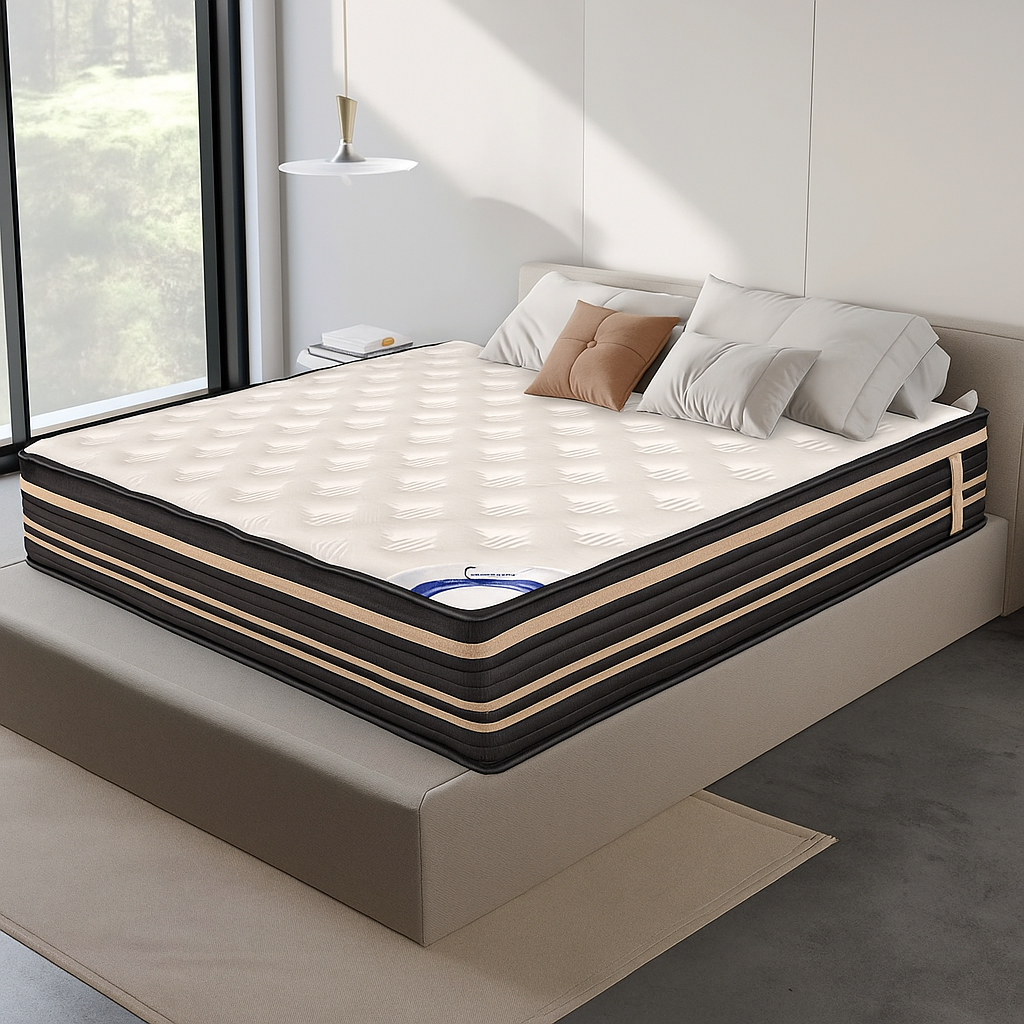

A dust-mite allergy is not caused by the mattress material itself. The problem is exposure to dust-mite allergens that can collect in bedding, mattresses, pillows, carpets and other soft furnishings. Because you spend hours in bed every night, the sleep environment is one of the most practical places to reduce exposure.
Reducing Allergen Exposure Where You Sleep
The goal is not to make a bedroom completely “mite-free.” That is unrealistic. A more useful approach is to reduce allergen exposure with a properly fitted allergen-proof encasement, regular hot washing of bedding, sensible humidity control and routine bedroom cleaning.
This guide explains what current allergy guidance recommends, what mattress features can make cleaning easier, when replacing a mattress may make sense, and how to build a practical allergy-aware sleep setup in the UAE.
What Is the Best Way to Reduce Dust Mites in a Mattress?
For someone with a confirmed or suspected dust-mite allergy, start with the bedroom routine rather than assuming you need a new mattress.
Reduce exposure with these steps:
- Use a fully zippered, allergen-proof encasement on the mattress and pillows.
- Wash sheets, pillowcases and washable bedding weekly in hot water at about 54°C (130°F) or higher when the care label allows.
- Keep indoor relative humidity below 50% where practical.
- Vacuum and damp-dust regularly, especially around the bed.
- Reduce dust-holding clutter and, where feasible, bedroom carpeting.
- Choose a mattress and mattress protector that are practical to keep clean and dry.
Why Do Dust Mites Build Up in Mattresses and Bedding?
Dust mites are microscopic relatives of ticks and spiders. They feed mainly on flakes of shed human skin and tend to thrive in warm, humid environments. Mattresses and bedding can provide both a food source and a protected place where allergen particles accumulate.
Warmth and Moisture Matter
A sleeping body adds heat and moisture to the bed. Humidity does not need to be extreme for a bedroom to feel comfortable to you while still being favorable to mites, which is why indoor humidity control is a core part of allergy guidance.
The Allergy Comes From Mite Allergens
Dust mites do not bite people. Allergy symptoms are triggered by proteins in dust-mite waste and body fragments that become part of household dust and can be inhaled or contact the eyes and nose.
The Mattress Is Only One Part of the Bedroom
Pillows, duvets, upholstered headboards, rugs, curtains, soft toys and carpets can also hold dust. Treating only the mattress while ignoring the rest of the bedroom can leave a large part of the exposure unchanged.
Control Is More Realistic Than Elimination
Even very clean homes can contain dust mites. The practical goal is to make the bedroom less favorable to mites and reduce how much allergen reaches the sleeper.
Could Your Mattress Be Making Allergy Symptoms Worse at Night?
A mattress does not “cause” a dust-mite allergy, but the bed can be an important exposure source for someone who is already sensitized. Dust-mite allergy can resemble other indoor or seasonal allergies, so symptoms alone cannot identify the trigger.
Common symptoms can include:
- Sneezing or a runny, blocked or itchy nose.
- Itchy, red or watery eyes.
- Coughing or throat irritation.
- Symptoms that feel worse in bed, overnight or on waking.
- Wheezing or breathing symptoms in people whose asthma is triggered by dust mites.
Please note: If symptoms are persistent, severe, associated with wheezing or shortness of breath, or unclear in cause, speak with a doctor or allergist. Testing may be needed to distinguish dust mites from pollen, pets, mold or other triggers.
What Do Allergy Specialists Recommend for Dust-Mite Control?
Leading allergy and medical organizations consistently focus on physical barriers, washing, humidity control and bedroom cleaning. The most useful approach is usually a combination of measures rather than one “anti-allergy” product.
| Action | What to Do | Why It Matters |
|---|---|---|
| Allergen-Proof Encasement | Fully enclose mattress and pillows with a zippered allergy barrier | Reduces exposure to allergen held in bedding |
| Weekly Hot Wash | Wash bedding at about 54°C (130°F)+ when the care label permits | Helps remove mites and allergens from washable bedding |
| Humidity Control | Keep relative humidity below 50% where practical | Makes the bedroom less favorable to mites |
| Vacuum + Damp Dust | HEPA vacuum where practical; damp-dust hard surfaces | Reduces dust without redistributing as much into the air |
| Reduce Reservoirs | Limit bedroom clutter and carpet where feasible | Fewer dust-holding surfaces near the sleeper |
Why the Encasement Detail Matters
A standard fitted mattress protector and an allergen-proof mattress encasement are not the same product. Allergy guidance usually refers to a tightly woven or allergen-impermeable cover that fully encloses the mattress and closes with a zipper. A normal protector can still be useful for keeping the mattress surface cleaner and protecting against spills, but it should not automatically be treated as a clinical dust-mite barrier.
A Cover Is Helpful, Not a Cure
Research reviews have found that impermeable mattress covers can reduce mite allergen levels, yet using a cover alone has not consistently improved allergic rhinitis or asthma outcomes. That is why this guide recommends a complete bedroom routine rather than promising that one mattress accessory will stop symptoms.
A Practical Dust-Mite Control Routine for UAE Bedrooms
Use this simple routine:
- Check bedroom humidity with an inexpensive hygrometer and aim to keep relative humidity below 50% where practical.
- Run air conditioning or dehumidification as needed and address condensation, leaks or damp patches rather than masking them.
- Wash sheets and pillowcases weekly in hot water when fabric-care instructions allow, then dry them completely.
- Use allergen-proof encasements for the mattress and pillows if dust-mite allergy is a concern.
- Vacuum floors and accessible mattress surfaces using the mattress manufacturer’s care instructions; a HEPA-equipped vacuum can help reduce redistributed particles.
- Damp-dust hard surfaces instead of dry dusting, which can send particles back into the air.
- Reduce dust-collecting clutter close to the bed and wash soft toys or washable bedroom textiles regularly.
- Keep the mattress and bed base dry and well ventilated.
Does Mattress Material Matter for Dust-Mite Allergies?
Some mattress features genuinely make an allergy-aware routine easier to maintain. Each one has a limit, though, and none of them replaces the bedroom steps above.
| Feature | Why It Can Help | Important Limitation |
|---|---|---|
| Removable Washable Cover | Easier surface cleaning | Not the same as an allergen-proof encasement |
| Breathable Construction | Supports a drier, more comfortable surface | Does not control room humidity by itself |
| Full Encasement Compatibility | Lets you add a proper allergy barrier | Check mattress depth and zipper fit |
| Waterproof Fitted Protector | Helps with spills, moisture and routine hygiene | Usually not a full dust-mite encasement |
| “Hypoallergenic” Label | Can flag easy-care materials or features | Not proof of preventing allergy symptoms |
Do You Need to Replace Your Mattress If You Have Dust-Mite Allergies?
Consider replacement when:
- The mattress is old and no longer supportive or comfortable.
- There is water damage, visible mold or a persistent damp problem that cannot be safely corrected.
- The cover or internal materials are badly damaged or heavily soiled.
- The mattress cannot be cleaned or protected in a practical way.
- You already need a new mattress and want an easier-to-maintain construction or removable cover.
If the mattress is still in good condition, start by protecting it correctly and improving your bedroom cleaning routine before assuming a full replacement is necessary.
If you do not want to buy a new mattress, Total Comfort’s Mattress Refurbishment Service offers a more resource-conscious alternative. Depending on the mattress condition, damaged or worn comfort layers can be replaced, or older layers can be upgraded with fresh hypoallergenic materials available at Total Comfort. This can help refresh the sleep surface and extend the usable life of your existing mattress while creating a cleaner, more allergy-aware sleeping environment.
Explore Mattress Refurbishment →Total Comfort Options for an Easier-to-Clean Sleep Setup
Terra Natural Latex Mattress with Bamboo Fabric
Best Overall · Natural CollectionThe Terra Natural Latex Mattress uses a solid natural latex block with a breathable pinhole design and a removable bamboo-fabric cover.
For an allergy-aware bedroom, the practical benefit is that the surface cover can be removed according to its care instructions while the natural latex construction is designed for airflow.
View Terra Mattress →Fauna Natural Latex Mattress with Bamboo Fabric
Best for Natural Feel · Natural ComfortThe Fauna Natural Latex Mattress combines a natural latex comfort layer with a high-density foam base and a removable bamboo cover.
It is a useful option for shoppers who want natural latex comfort but prefer a softer feel than Terra, with the same removable-cover advantage for routine surface cleaning.
View Fauna Mattress →Aquilo Cooling Gel Memory Foam Mattress
Best for Hot Sleepers · Cooling ComfortThe Aquilo Cooling Gel Memory Foam Mattress combines cooling gel-infused memory foam with a spring-free, high-density foam base and a breathable zip cover.
For customers concerned about allergens and mattress hygiene, its most practical feature is the removable and washable cover, which makes regular surface cleaning easier. The cooling gel layer also helps disperse body heat for a more comfortable sleep environment.
View Aquilo Mattress →Somnus Memory Foam Mattress
Best for Pressure Relief · Premium ComfortThe Somnus Memory Foam Mattress is a spring-free memory foam mattress designed with a pressure-relieving memory foam comfort layer and an adaptive high-density foam base.
Its breathable, skin-friendly zip cover is removable and washable, making it easier to maintain a cleaner mattress surface as part of an allergy-aware bedroom routine.
View Somnus Mattress →Premium Waterproof Bamboo Mattress Protector
Best for Everyday Hygiene · Bedding AccessoryThe Premium Waterproof Bamboo Mattress Protector adds a washable barrier between the sleeper and the mattress and helps protect against moisture and everyday spills.
Important: This protector is useful for mattress hygiene, but it is not described here as a substitute for the fully zippered allergen-proof encasement recommended in dust-mite allergy guidance.
What Should Allergy-Prone Shoppers Check Before Buying?
Focus on features you can actually verify on the product page, rather than on broad allergy claims.
- Choose an easy-care cover: Look for a removable or washable mattress cover and check the exact cleaning instructions before buying.
- Check encasement compatibility: Make sure the mattress can fit a properly sized, fully enclosing dust-mite-proof mattress encasement.
- Look for breathable construction: Good airflow can help keep the sleep surface drier, although controlling bedroom humidity remains important for reducing dust mites in the mattress.
- Check cleaning instructions: Know whether the mattress surface can be vacuumed, spot-cleaned or the cover machine-washed.
- Keep the bed base clean and dry: Dust and moisture can also collect around the foundation, so maintain good ventilation beneath the mattress.
- Be careful with “hypoallergenic” claims: Focus on specific features such as washable covers, breathable materials and encasement compatibility rather than relying on marketing terms alone.
- Do not sacrifice sleep comfort: An allergy-friendly mattress should still provide the right firmness, pressure relief and support for your sleeping position.
People Also Ask
Can dust mites live in a new mattress?
Yes. A new mattress is not permanently protected from dust mites. Over time, bedding and the surrounding bedroom can accumulate the moisture, skin flakes and dust that support mite populations. A new mattress should still be part of the same cleaning, humidity and encasement routine.
How do I know if I have dust mites in my mattress?
Dust mites are microscopic, so you generally cannot confirm them by looking at a mattress. Night-time or morning allergy symptoms may raise suspicion, but similar symptoms can come from pollen, pets or mold. An allergist can help identify the actual trigger.
Does vacuuming a mattress remove dust mites?
Vacuuming can remove some dust and allergen particles from accessible surfaces, but it is not a complete dust-mite solution. Combine appropriate vacuuming with encasements, weekly hot washing and humidity control.
Is a mattress protector enough for dust mites?
Not necessarily. A normal fitted protector mainly protects the mattress surface. Dust-mite guidance typically recommends a fully enclosing, zippered allergen-proof encasement for the mattress and pillows. Check the product specification rather than assuming every protector performs the same job.
Is natural latex the best mattress material for dust-mite allergies?
There is no single mattress material that replaces proven bedroom allergen-control steps. Natural latex can be breathable and easy to pair with a removable cover, but the more important factors are keeping the bed dry, washing bedding, using the correct encasement and choosing a mattress you can maintain easily.
How often should I wash bedding for dust-mite allergies?
Major allergy guidance commonly recommends washing sheets, pillowcases and washable bedding every week in water at about 54°C (130°F) or hotter when the care label permits. Dry bedding completely before putting it back on the bed.
Should I replace my mattress because of allergies?
Not always. If your mattress is still supportive and structurally sound, you may consider Total Comfort’s mattress refurbishment service instead of replacing the entire mattress. Worn or older comfort layers can be replaced with new hypoallergenic layers, giving the mattress a fresher sleep surface while extending its usable life.
Create a More Allergy-Friendly Bedroom, from Mattresses to Bedding Accessories
A cleaner sleep environment starts with more than just the mattress. For people concerned about dust mites, allergens and bedroom hygiene, the materials used across your mattress, pillow and mattress protector can all play a role in creating a more comfortable, allergy-aware setup.
Total Comfort’s Natural Sleep Collection brings together breathable, easy-care sleep essentials designed to work as a complete system, from the mattress you sleep on to the bedding accessories closest to your skin. Options such as the Hypoallergenic Mattresses and the Premium Waterproof Bamboo Mattress Protector make it easier to create a fresher, more practical sleep environment while maintaining everyday comfort.
Total Comfort mattresses are manufactured in the UAE and backed by Reliance Bedding Industry’s 25+ years of mattress-making experience. Explore the Natural Sleep Collection and build a more comfortable, breathable and allergy-aware sleep setup for your bedroom.