
Key Takeaways
- Healthcare professionals recommend sleeping on your left side during pregnancy, as it helps improve blood circulation to the uterus and supports healthy fetal development.
- Sleeping on your back or stomach is generally considered safe only during the first trimester, before the growing uterus places pressure on major blood vessels.
- Using pregnancy pillows or extra cushions for support can make side sleeping more comfortable and improve overall sleep quality throughout pregnancy.
Frequent nighttime bathroom trips, nausea, heartburn, lower back pain, and leg cramps are just a few of the common challenges that can disrupt sleep during pregnancy. As the body changes and grows to support the developing baby, many pregnant people find it increasingly difficult to get comfortable at night. Finding the right sleeping position often becomes a struggle, making restful, high-quality sleep harder to achieve.
In this guide, we explore the best sleeping positions during pregnancy and explain why medical experts recommend avoiding certain positions at different stages. We also share practical tips to help pregnant people stay comfortable and supported, so they can enjoy deeper, more restorative sleep throughout pregnancy.

Best Sleep Position During Pregnancy
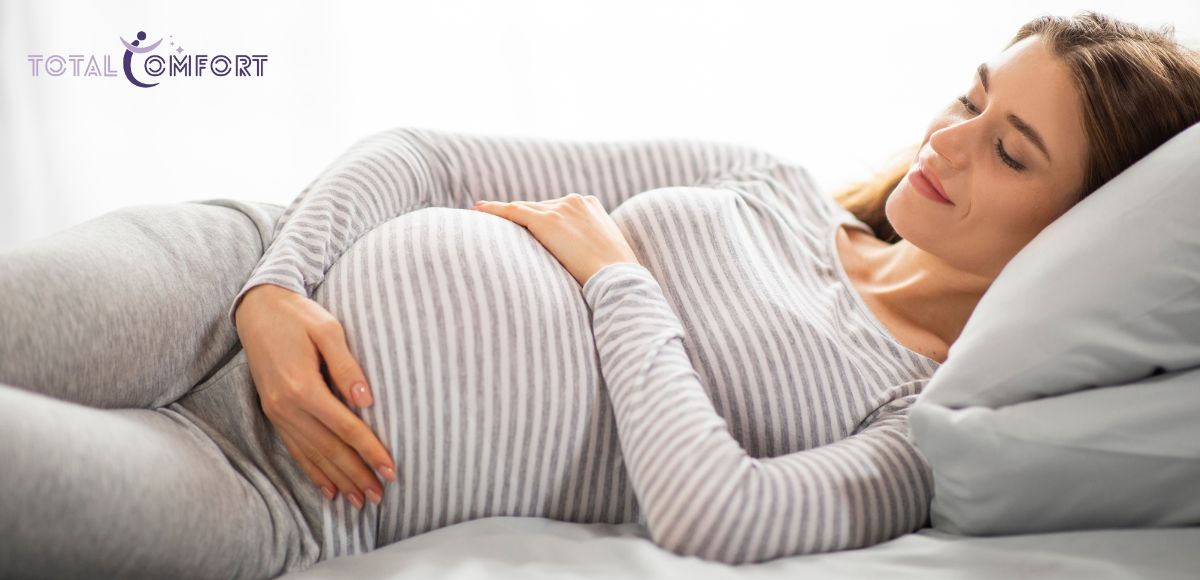
Most medical experts agree that once the belly begins to grow, the best sleep position during pregnancy is side sleeping, ideally on the left side with the knees gently bent, often called the fetal position. Sleeping on your side not only feels more comfortable as pregnancy progresses, but it also supports healthy blood circulation for both the pregnant person and the developing baby.
To enhance comfort and reduce pressure on the lower back and hips, many pregnant people find relief by placing a pillow between the knees or under the belly. These simple adjustments can significantly improve sleep quality during pregnancy.
Sleeping on the Left Side vs. the Right Side
Both left-side and right-side sleeping are generally considered safe during pregnancy. However, healthcare professionals often recommend sleeping on the left side as the preferred option.
Left side sleeping during pregnancy helps improve blood flow, allowing oxygen and essential nutrients to reach the baby more efficiently. It can also reduce swelling in the legs, ankles, and feet by supporting better circulation and minimizing pressure on major blood vessels.
Sleeping on the right side is still a safe and acceptable choice, especially if it feels more comfortable or if staying on the left side all night is difficult. The most important factor is choosing a sleep position that allows for deeper, more restful sleep and better overall support throughout the night.
Looking to improve your sleep? Try upgrading your mattress.

Best Mattress Pick for Pregnant Women
Zephyr Hybrid Memory Foam Mattress
Thoughtfully designed to support your body during pregnancy, this hybrid memory foam mattress gently relieves pressure points while promoting healthy spinal alignment, helping you enjoy a calm, weightless, and deeply restorative sleep.
Shop NowBack Sleeping During Pregnancy
During the first trimester, sleeping on your back is generally considered safe, especially if it is your preferred sleep position. However, as pregnancy progresses, particularly after the 20-week mark, back sleeping during pregnancy may start to pose potential concerns.
As the uterus grows, it can place pressure on the inferior vena cava, a major vein responsible for carrying blood back to the heart. This pressure may reduce blood flow to both the pregnant person and the developing baby. As a result, some people may experience symptoms such as dizziness, shortness of breath, or a drop in blood pressure.
For these reasons, healthcare providers often recommend transitioning to side sleeping during the second and third trimesters to support healthy circulation and promote safer, more comfortable sleep throughout pregnancy.
Sleep Positions to Avoid During Pregnancy
Healthcare providers commonly advise avoiding stomach sleeping and back sleeping during the second and third trimesters of pregnancy. As the baby grows, lying on the back allows the weight of the uterus to press against major blood vessels, including the aorta and the vena cava. This pressure can reduce healthy blood circulation to both the pregnant person and the baby, sometimes causing dizziness or discomfort upon waking.
Back sleeping may also place added strain on the spine, potentially worsening lower back pain, which is a common pregnancy complaint. In addition, sleeping on the back has been linked to an increased risk of snoring, sleep apnea, and other breathing issues during sleep.
While many experts recommend avoiding back sleeping after 20 weeks of pregnancy, recent research suggests that back and right side sleeping during the first two trimesters is unlikely to increase the risk of stillbirth. For this reason, some healthcare professionals encourage pregnant people to prioritize comfort during early pregnancy while transitioning to side sleeping later on.

How to Find a Comfortable Sleeping Position During Pregnancy
Finding the right sleep position during pregnancy can take some getting used to. If you are accustomed to sleeping on your stomach or back, transitioning to side sleeping may feel uncomfortable at first. Even regular side sleepers often struggle as their body changes. The good news is that a few simple adjustments can significantly improve comfort and help you get better sleep throughout pregnancy.
- Bend Your Knees: Sleeping on your side with bent knees helps support your back and improve alignment.
- Use Supportive Pillows: Pillows between your knees, under your belly, or behind your back can reduce pressure and discomfort.
- Try a Pregnancy Pillow: A full-body pregnancy pillow offers head-to-toe support and improves sleep posture.
- Choose the Comfortable Mattress: A pressure-relieving mattress or topper can help ease hip and joint pain from side sleeping.
- Elevate Your Upper Body: Raising your upper body slightly may help reduce nighttime heartburn.
- Sleep on the Left Side: Sleeping on the left side of the bed can naturally encourage left-side sleeping during pregnancy.
Sleep Better During Pregnancy
Getting quality sleep during pregnancy is not just about finding the right sleeping position. Simple daily habits and a calming bedtime routine can greatly improve sleep quality and overall comfort.
Stick to a Consistent Sleep Schedule
Going to bed and waking up at the same time each day helps regulate your natural sleep cycle. Relaxing activities like a warm bath or calming drink before bed can signal your body that it is time to unwind.
Create a Calm Sleep Environment
Keep your bedroom quiet, dark, and free from distractions. Using your bed only for sleep and intimacy helps your mind associate it with rest.
Nap Smart During the Day
Short naps can help make up for lost sleep, especially if nighttime rest is interrupted. Try to nap earlier in the day to avoid disrupting nighttime sleep.
Practice Relaxation Techniques
Stress can interfere with sleep during pregnancy. Gentle breathing exercises, meditation, or stretching may help calm your body before bedtime.
Watch Evening Food and Drinks
Eating heavy meals or drinking too many fluids at night can disturb sleep. Light snacks may help prevent nausea without worsening heartburn.
Limit Caffeine Intake
Caffeine can make it harder to fall asleep. If consumed, keep coffee or tea to the morning hours to support better sleep at night.
Take Prenatal Vitamins With Guidance
Prenatal vitamins support both maternal and baby health and may help reduce symptoms like restless legs. Always consult a healthcare provider before starting supplements.
Stay Active With Regular Exercise
Gentle exercise and stretching during pregnancy can help reduce back pain, leg cramps, and sleep discomfort. Strengthening core and back muscles supports better rest as your body changes.
When to Consult to Your Doctor
Sleep changes are common during pregnancy, but ongoing discomfort or sleep problems should not be ignored. If you often wake up on your back during the second or third trimester and feel dizzy, nauseated, or short of breath, it is important to contact your healthcare provider.
You should also speak with your doctor if you experience persistent back or hip pain, swelling, poor sleep quality, or symptoms that may indicate a pregnancy related sleep disorder. Certain sleep issues during pregnancy have been associated with a higher risk of complications.
Your provider can suggest safer sleep positions, comfort strategies, or supportive sleep products to help you rest better. They can also evaluate and treat pregnancy related conditions such as sleep apnea, heartburn, or restless legs syndrome to support both your health and your baby’s development.
Frequently Asked Questions
Which Sleeping Position Is Not Good During Pregnancy?
Sleeping on your back during pregnancy, especially in the second and third trimesters, is not recommended as it can restrict blood flow and cause dizziness or discomfort. Sleeping on the stomach also becomes unsafe and uncomfortable as pregnancy progresses.
What Is the Best Way to Sleep While Pregnant?
Side sleeping is the best and safest way to sleep during pregnancy. Sleeping on the left side is often recommended because it supports healthy blood circulation to the baby. Using pillows can help improve comfort and alignment.
Is It Okay to Sleep on the Right Side When Pregnant?
Yes, sleeping on the right side during pregnancy is generally safe. Changing sides during sleep is normal and can help reduce pressure and improve overall comfort.