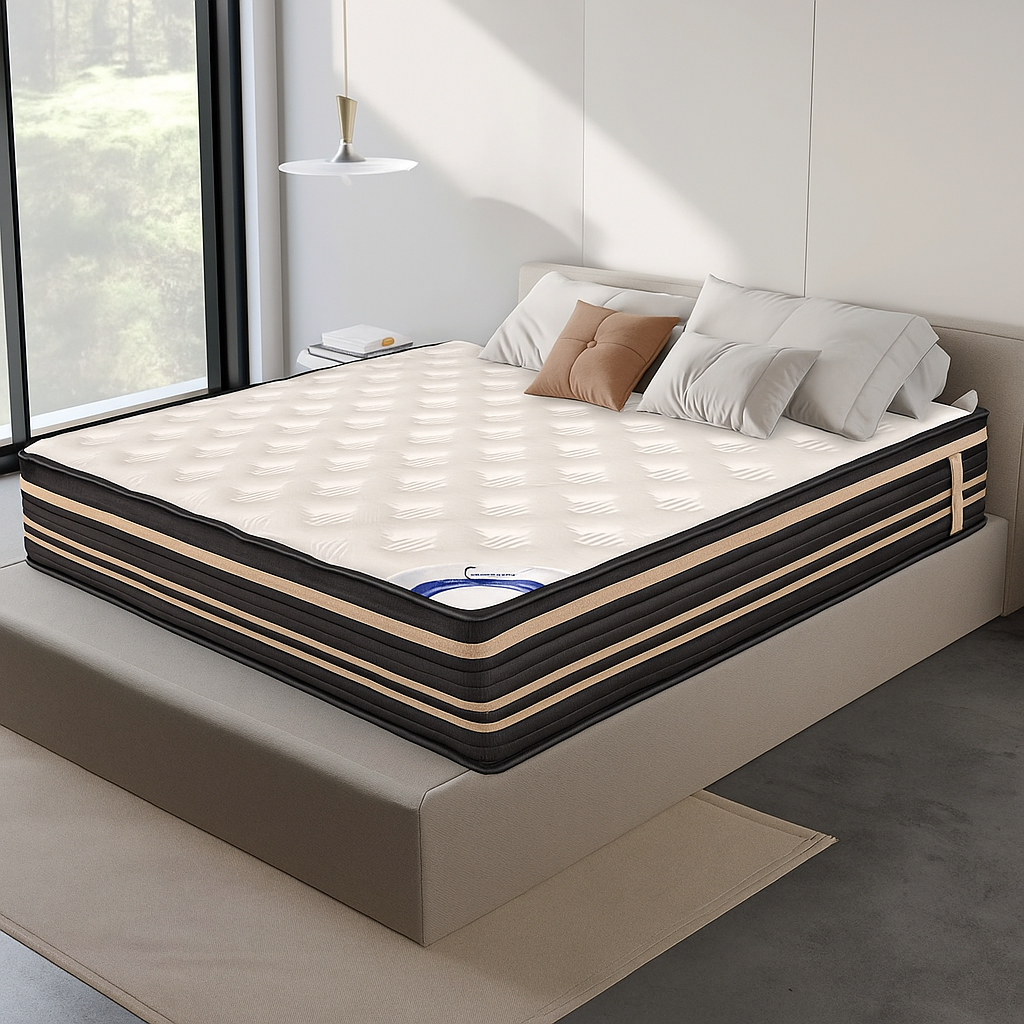

Tailbone pain changes what a good mattress actually means. Too firm and the coccyx takes the pressure all night; too soft and your hips sink out of alignment. Here is what actually helps, and which mattress construction to look for in the UAE.
What Type of Mattress Is Best for Tailbone Pain?
If you’re sleeping with tailbone pain, the mattress you need is one with zoned or targeted support that keeps direct pressure off your coccyx while still holding your hips and lower back in a neutral line. A medium-firm mattress with a pocket spring system tends to work better than an all-foam bed here, because zoned springs can respond differently under your tailbone than they do under your shoulders. Straight firm mattresses often make things worse, not better, since they push back against the coccyx instead of letting it settle.
Tailbone pain, known medically as coccydynia, is more common than most people assume, and it isn’t just a minor ache you sleep off in a night. According to Dr. Dena Barsoum, a physiatrist at the Hospital for Special Surgery in New York, the coccyx is made up of several small bony segments fused together at the base of the spine, and along with two other bones, it helps the body stay balanced while sitting.
Research cited by the National Institutes of Health has also found that women are considerably more likely than men to develop coccydynia, particularly following childbirth or a fall directly onto the tailbone. For anyone already dealing with this, the last thing you want is a mattress that adds to the problem every single night.
How Your Mattress Affects Tailbone Pain
When you lie down, your tailbone becomes one of the main pressure points carrying your body weight, especially if you sleep on your back. On a mattress that’s too firm, that pressure has nowhere to go, and the coccyx bears the brunt of it all night. On a mattress that’s too soft, your hips sink unevenly and your spine loses its natural alignment, which can pull on the muscles and ligaments around the tailbone even further.
This is exactly why a plain firm mattress for tailbone pain isn’t automatically the right call, despite what a lot of people assume. What actually helps is a mattress that contours around the tailbone just enough to take pressure off it, while still supporting the surrounding hips and lower back so your spine doesn’t sag out of position. This is the whole idea behind an orthopedic, also known as medicated mattress: it’s built to work with your body’s structure rather than fight against it.
Best Position to Sleep With Tailbone Pain
Your sleep position matters just as much as the mattress underneath you. If you’re wondering about the best way to sleep with coccyx pain, side sleeping is consistently the position most recommended by physiotherapists and orthopedic specialists.
Sleeping on your side takes weight off the coccyx entirely, since you’re no longer resting directly on it. Placing a pillow between your knees also helps, as it keeps your hips level and stops your spine from twisting overnight, which reduces strain on the lower back and tailbone together.
Back sleeping tends to be the hardest position for tailbone pain because it places direct, sustained pressure right on the coccyx for hours. Stomach sleeping isn’t much better either, as it forces the lower spine into an unnatural arch and can pull on the same muscles that are already inflamed. If you’re a back sleeper, switching to your side might feel strange for the first few nights, but it’s one of the simplest changes that actually makes a difference.
For anyone who identifies as a side sleeper already, the mattress question becomes even more specific. A mattress for lower back pain side sleeper needs enough give at the hip and shoulder to let those areas sink slightly, without letting the middle of the body sag out of alignment. That balance is harder to get right than it sounds, which is where mattress construction, not just firmness level, starts to matter.
What Makes a Good Mattress for Tailbone Pain
Not every mattress marketed as orthopedic actually delivers the kind of support that helps with coccyx pain. Here’s what tends to make the real difference:
- Zoned pocket spring support, so the area under your tailbone isn’t getting the same pushback as the area under your shoulders.
- A medium-firm feel rather than extra firm, since too much firmness increases direct pressure on the coccyx.
- A contouring comfort layer like memory foam on top of the springs, to cushion the tailbone without letting the hips sink too deep.
- Motion isolation, which matters more than people expect, since being jolted awake by a partner’s movement can aggravate an already sensitive area.
- Enough mattress height and edge support to keep the sleeping surface consistent, rather than compressing unevenly over time.
Total Comfort builds its mattresses around exactly this kind of layered, zoned construction, manufactured locally in the UAE with a 30-night trial so you actually have time to feel the difference before committing.
Total Comfort’s Recommended Mattresses for Tailbone Pain
Both of the mattresses below use a zoned pocket spring system with a memory foam comfort layer, which is the combination that tends to work best when the coccyx is the sensitive point.
Vigor 3-Zone Pocket Spring Memory Foam Mattress
Best for Zoned Support · Hybrid Pressure ReliefThe Vigor 3-Zone Pocket Spring Memory Foam Mattress is one of the more thoughtful builds for anyone sleeping with tailbone pain, mainly because of how the 3-zone spring layout works. Instead of one uniform level of support across the whole mattress, the springs respond differently depending on which part of the body is resting where, so the zone under your hips and lower back isn’t pushing back the same way as the zone under your shoulders. That distinction matters a lot when even mild, direct pressure on the coccyx can set off pain.
The memory foam pillow top sitting above the springs gives an extra layer of cushioning right where you need it, letting your tailbone settle in slightly instead of resting flat against a firm surface. At 32cm tall, it’s also one of the taller mattresses in the range, which adds to that cushioned, supported feel without losing structure underneath.
Noctis Calm 5-Zone Pocket Spring Memory Foam Mattress
Best for Ortho Support · Targeted Zoned ComfortThe Noctis Calm 5-Zone Pocket Spring Memory Foam Mattress takes the zoned support idea one step further with five distinct zones instead of three. This gives an even more precise response across the body, which is particularly useful for back sleepers who need firm support under the lumbar region but still want some give right at the tailbone itself.
Because the springs are individually wrapped, movement stays contained to wherever it happens, so if you shift positions during the night trying to find relief, your partner won’t feel it. The foam-encased edges also mean the support stays consistent even if you tend to sleep closer to the side of the bed.
What Physiotherapists Recommend Beyond the Mattress
1. Give the area time, not just a new mattress
Coccydynia often improves gradually. Physiotherapists commonly note that non-invasive treatment, including targeted exercises and manual therapy, leads to meaningful improvement in the large majority of cases, so a supportive mattress works best alongside professional guidance, not instead of it.
2. A cushion during the day helps as much as the mattress at night
Since sitting for long periods is one of the most common tailbone pain triggers, a coccyx or donut cushion during desk hours takes pressure off the area before you even get to bed, reducing how inflamed it feels by the time you lie down.
3. Avoid sleeping flat on your back for now
Even with a supportive mattress, lying flat on your back places sustained weight directly on the coccyx. Side sleeping with a pillow between the knees remains the most consistently recommended position while the area heals.
4. Don’t judge the mattress in the first few nights
Every Total Comfort mattress comes with a 30-night sleep trial for a reason. It genuinely takes the body some time to adjust to a new sleep surface, and tailbone pain in particular can take a little longer to respond as the muscles around it relax into the new support.
5. See a specialist if pain persists or spreads
If tailbone pain lasts beyond a few weeks, worsens with sitting, or comes with numbness, it’s worth getting assessed by a physiotherapist or doctor rather than relying on mattress changes alone.
Please note: This guide is general sleep and product information, not medical advice. If your tailbone pain is severe, persistent or followed an injury, please speak to a qualified physiotherapist or doctor before making changes.
People Also Ask
What is the best mattress for coccyx pain?
The best mattress for coccyx pain is a medium-firm option with zoned pocket spring support and a contouring comfort layer on top. This combination cushions the tailbone directly while keeping the hips and lower back properly aligned, which is why zoned mattresses like the Vigor 3-Zone and Noctis Calm 5-Zone tend to work better than a single-firm mattress.
What is the best position to sleep with tailbone pain?
Side sleeping with a pillow placed between the knees is generally the best position to sleep with tailbone pain, since it removes direct pressure from the coccyx entirely. Back sleeping tends to make tailbone pain worse because it places continuous weight right on the affected area.
Is a firm mattress bad for tailbone pain?
A very firm mattress can actually make tailbone pain worse, because it doesn’t allow the coccyx any cushioning and pushes back against it all night. A medium-firm mattress with zoned support tends to offer better relief than an extra-firm surface.
How long does tailbone pain from sleeping wrong usually last?
This varies from person to person, but many cases of mild coccydynia ease within a few weeks with the right sleep position, a supportive mattress, and reduced sitting time. If pain continues beyond that or worsens, it’s best to consult a physiotherapist or doctor.
Can an orthopedic mattress really help with tailbone pain?
Yes, an orthopedic mattress with zoned pocket springs is designed to distribute weight more evenly across the body instead of concentrating it on one point like the coccyx. This reduces the sustained pressure that tends to aggravate tailbone pain overnight.
Sleep Shouldn’t Make Tailbone Pain Worse
Sleeping with tailbone pain is exhausting in a way that’s hard to explain to anyone who hasn’t dealt with it. The good news is that the right mattress, paired with the right sleep position, can genuinely take a lot of that nightly discomfort off your plate. Total Comfort’s zoned pocket spring mattresses are manufactured right here in the UAE, built specifically to support the way people in this region actually sleep and live.
If you’re ready to stop dreading bedtime, explore the Vigor, Noctis Calm and other options below, or reach out to our sleep specialists for a personalised recommendation based on how you sleep.