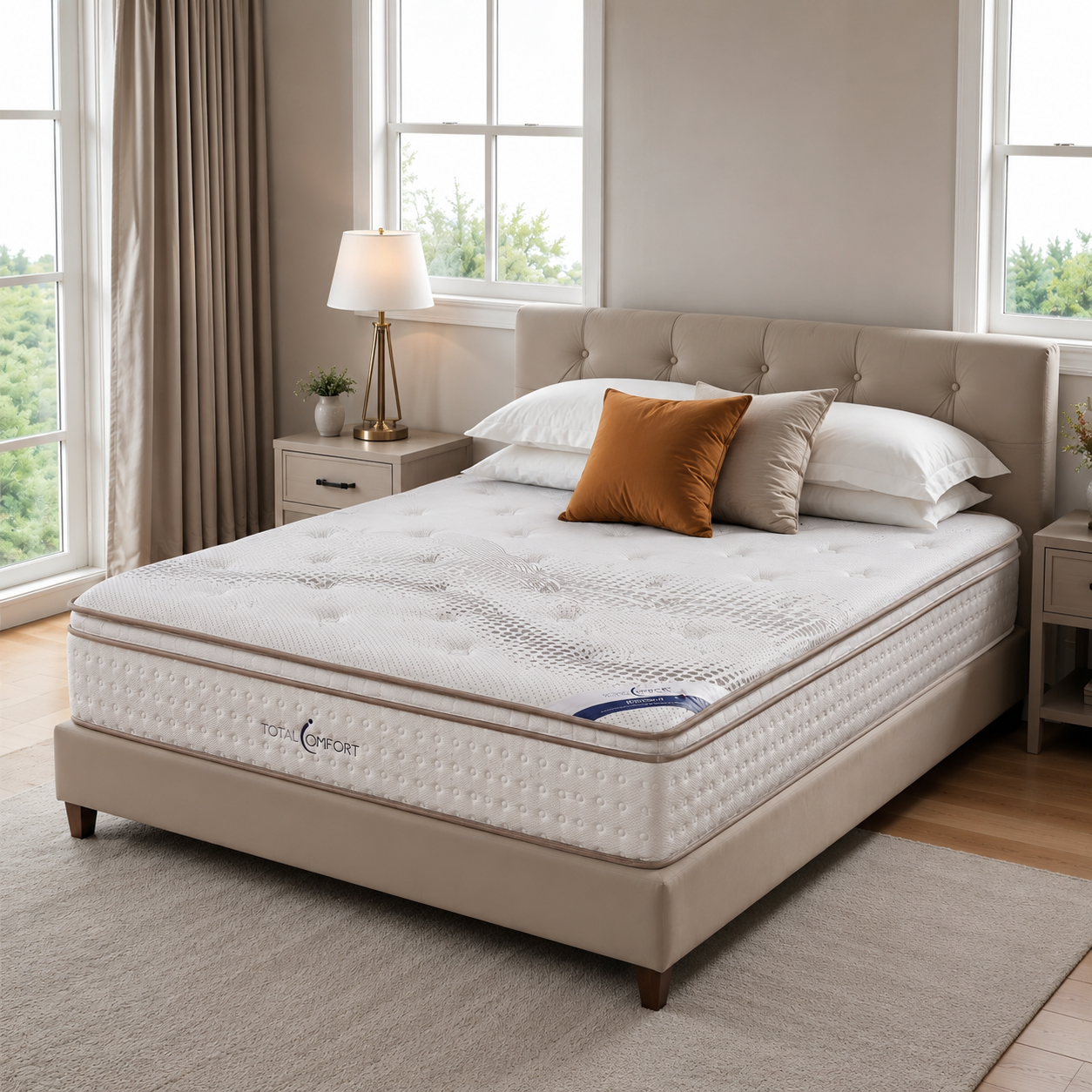
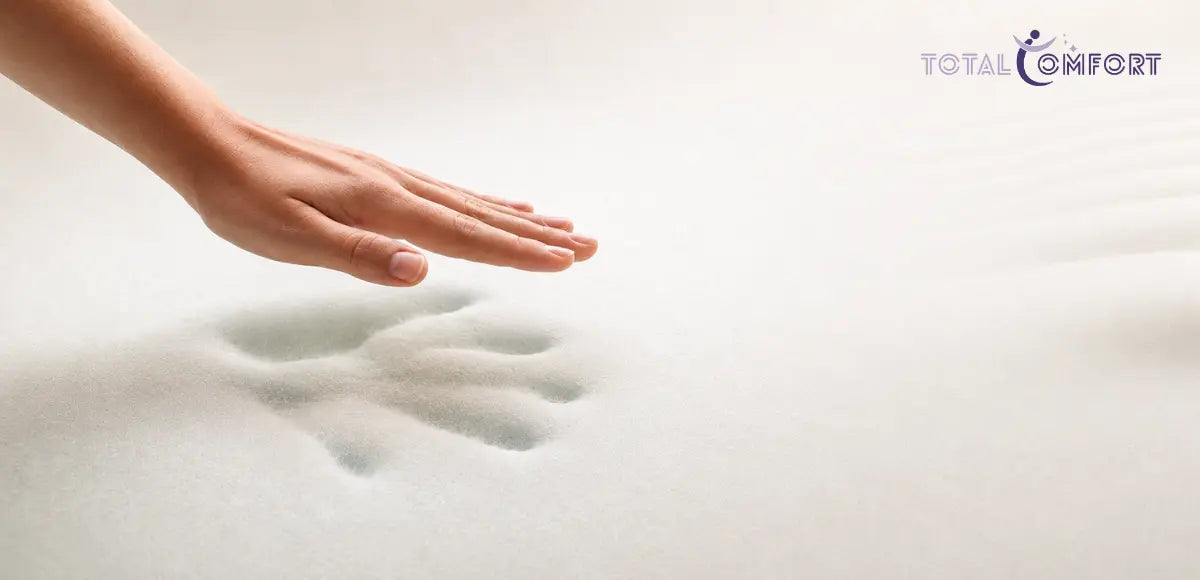
This guide explains density in simple terms, shows why memory foam, polyurethane foam, natural organic latex and rebonded foam should not be compared by one number, and gives you a practical checklist for choosing a foam mattress with more confidence.
Foam density is one of the most useful mattress specifications and one of the easiest to misunderstand. A mattress described as "high density" may sound automatically firmer, more supportive or better, but density does not directly tell you how hard the mattress will feel.
Mattress foam density tells you how much foam material is packed into a given volume. It can influence durability, support and how well a foam layer keeps its original properties over repeated use, but it should always be read alongside firmness, layer thickness and the rest of the mattress construction.
What Does Mattress Foam Density Mean?
Mattress foam density simply tells you how much foam material is packed into a certain amount of space. It is usually measured in kilograms per cubic metre (kg/m³).
In simple terms, density helps you understand the construction and potential durability of the foam, but it does not tell you everything about how the mattress will feel.
- Density is not firmness: A high-density foam can still feel soft, medium or firm.
- Compare the same type of foam: Memory foam, natural organic latex and regular polyurethane foam have different density ranges, so their numbers should not be compared directly.
- Higher is not always better: The right density depends on whether the foam is being used for comfort, transition or support.
- Look at each mattress layer: A mattress can contain several foams with different densities, each doing a different job.
- Consider the complete mattress: Density works together with firmness, foam thickness and the support system to determine how the mattress performs.
- There is no single best foam density for sleeping: The best choice depends on the foam type, mattress construction and the comfort and support you prefer.
Easy way to remember: Density tells you how much material is in the foam, while firmness tells you how soft or hard the foam feels.
Is a High-Density Foam Mattress Always Firmer?
No. Mattress foam density and firmness are different things.
Think of it this way:
- Density: tells you how much foam material is packed into a certain space.
- Firmness: tells you how soft or hard the foam feels when you lie on it.
- Thickness: tells you how deep the foam layer is.
So, a high-density foam mattress can still feel soft or medium, while a lower-density foam can be made to feel firm.
| Specification | What It Means | Easy Example |
|---|---|---|
| Foam Density | How much material is packed into the foam | Helps you compare construction and potential durability |
| Firmness | How soft or hard the foam feels | Determines whether the mattress feels soft, medium or firm |
| Layer Thickness | How thick each foam layer is | Affects how much cushioning or support that layer provides |
Why Does Foam Density Matter in a Mattress?
1. Better Durability
Within the same foam type, higher mattress foam density can help the material hold its shape and support for longer.
2. Stable Support
A high-density foam mattress can still feel soft or medium. Softer comfort layers can sit above a denser support base for a balanced feel.
3. Helps Limit Excessive Sinking
Denser support foam can help create a more stable base and reduce excessive sinking, but firmness and overall mattress construction still matter.
4. More Material, More Weight
Higher-density foam contains more material, so it is usually heavier and may cost more to produce. This is especially noticeable in larger sizes such as a king size high density foam mattress.
What Foam Density Grades Are Used in Total Comfort Mattresses?
Mattress foams are available in different density grades depending on what each layer needs to do. In our manufacturing range, commonly used densities include 13D, 20D, 25D, 40D, 75D and 90D.
Here, "D" refers to the density grade of the material. A higher number generally means more material is packed into the same volume, but higher density does not automatically mean a firmer or more comfortable mattress.
| Density Grade | Role in the Mattress |
|---|---|
| 13D | Lightweight cushioning or secondary comfort layers where heavy structural support is not required |
| 20D | General comfort and cushioning applications |
| 25D | More supportive comfort or transition layers |
| 40D | Denser foam used where stronger support, pressure relief or better shape retention is required |
| 75D | High-density material such as natural organic latex, which has its own density range and responsive feel |
| 90D | Very dense materials such as rebonded foam, used for strong, stable and extra-firm support |
The important point is that these figures should not be compared as if every foam is the same material. A 75D natural organic latex layer behaves very differently from 75D polyurethane foam, just as 90D rebonded foam serves a different purpose from memory foam.
At Total Comfort, we choose the foam density according to the job of the layer. Where stronger structural support, repeated-load resistance or shape retention is required, we can use a higher-density material. Softer or lighter layers may use a different density to create the required comfort.
So rather than asking, "Which is the highest density?", a better question is: "Is the right density being used in the right part of the mattress?"
Compare Total Comfort Foam Mattresses
Total Comfort offers different foam mattress types for different comfort preferences, from contouring memory foam and cooling gel to responsive natural organic latex and extra-firm rebonded foam. Use this quick comparison to find the option that best suits your sleep needs.
| Product | Available Height | Material | Best For | Key Features |
|---|---|---|---|---|
| Somnus Memory Foam Mattress | 18, 20 & 25 cm | Memory Foam | Pressure relief & contouring comfort | Spring-free, medium feel, removable washable cover |
| Aquilo Cooling Gel Memory Foam Mattress | 18, 20 & 25 cm | Gel-Infused Memory Foam | Hot sleepers & cooling comfort | Cooling gel, contouring support, breathable removable cover |
| Terra Natural Organic Latex Mattress | 15 cm | Natural Organic Latex | Responsive & breathable comfort | 7-Zone, flippable, pinhole airflow, bamboo fabric cover |
| Cor Lapius Rebonded-Foam Ortho Mattress | 15, 20 & 25 cm | Rebonded Foam | Extra-firm support | Dense supportive core, minimal sinking, reversible, spring-free |
Each mattress creates a different sleep experience, so consider material, firmness and construction together rather than choosing by one feature alone.
What Is the Best Foam Density for Sleeping?
There is no single best foam density for sleeping. The right choice depends on the foam type, mattress layer and comfort you prefer.
When comparing foam density:
- Check the layer: Comfort, transition and support foams can use different densities.
- Check firmness separately: Density does not tell you whether the mattress feels soft or firm.
- Look at layer thickness: A dense foam layer still needs the right thickness and support underneath.
- Use the trial period: Specifications help, but personal comfort still matters.
What About a Medium Density Foam Mattress?
A medium density foam mattress can be a balanced option, but the term alone is not enough. Check the foam type, actual density and firmness before comparing products.
What About High Density Natural Organic Latex Foam?
High density natural organic latex foam uses a different density range from memory foam or polyurethane foam.
How Does Foam Density Affect Mattress Lifespan?
Mattress foam density can influence how well a foam layer handles repeated use over time.
- Lower-density foam: generally contains less material and may lose its original shape or support sooner under regular compression.
- Higher-density foam: usually has more material within the same volume, which can help it retain its structure for longer when compared with a similar foam type.
- Body impressions can develop over time in any foam mattress, but density is one factor that affects how quickly this may happen.
- Density is not the only durability factor. Foam quality, layer thickness, mattress construction, body weight and daily use also matter.
How Total Comfort Approaches Foam Construction in the UAE
Total Comfort mattresses are manufactured in the UAE using different foam constructions for different comfort and support needs.
If you prefer close contouring and a spring-free feel, explore our Memory Foam Mattresses, which combine cushioning comfort with supportive foam layers.
For sleepers who prefer a more stable and supportive surface, our Firm Mattresses include options designed around firmer comfort preferences and stronger support.
You can also explore our Natural Organic Latex Mattresses if you prefer a responsive, breathable alternative to conventional foam.
When comparing mattress foam density, look beyond the words "high density". Consider the foam type, firmness, layer thickness and complete mattress construction together.
Not sure which construction suits you? Compare the options online, visit the Total Comfort showroom, or use the 30-night trial available on eligible mattresses to experience the comfort at home.
People Also Ask
What is mattress foam density?
Mattress foam density is the mass of foam per unit volume, commonly shown in kg/m³ or pcf. It helps describe how much material is present in the foam and can be useful when comparing durability and support within the same foam family.
Is a high density foam mattress better?
It can be more durable than a comparable lower-density foam, but higher density is not automatically more comfortable or better for every layer. Compare density with firmness, thickness, foam type and the overall mattress construction.
What is the best foam density for sleeping?
There is no universal best density. Memory foam, polyurethane foam and natural organic latex use different density ranges, and comfort depends on more than density. Choose the correct foam type and firmness first, then use density as one part of the quality comparison.
Is a high density memory foam mattress always firm?
No. A high density memory foam mattress can still be soft or medium-soft because density and firmness are separate properties. Firmness is measured by how much force is needed to compress the foam, not simply by its weight per volume.
Does dense memory foam last longer?
Within comparable foam formulations, higher polymer density generally improves the ability of flexible polyurethane foam to retain its original properties. Actual mattress life still depends on formulation, layer thickness, support system, use and care.
Does a king, double or single foam mattress need a different density?
Not because of size alone. A king, double and single mattress can all use the same foam density. The larger size simply contains more total material. Construction and load requirements may change by model, so check the manufacturer's specification rather than the bed size alone.
Choose Foam by Specification, Not Just the "High-Density" Label
Mattress foam density is a valuable quality clue, but it only becomes useful when you know the foam type, firmness and role of each layer. Compare like-for-like materials, look at the complete construction and test the comfort rather than assuming the highest density will automatically be the best mattress for you.
Total Comfort mattresses are manufactured in the UAE and backed by Reliance Bedding Industry's 25+ years of mattress-making experience. Explore our foam and memory foam options below, or speak with our sleep specialists if you want help comparing firmness, construction and support for your sleeping style.