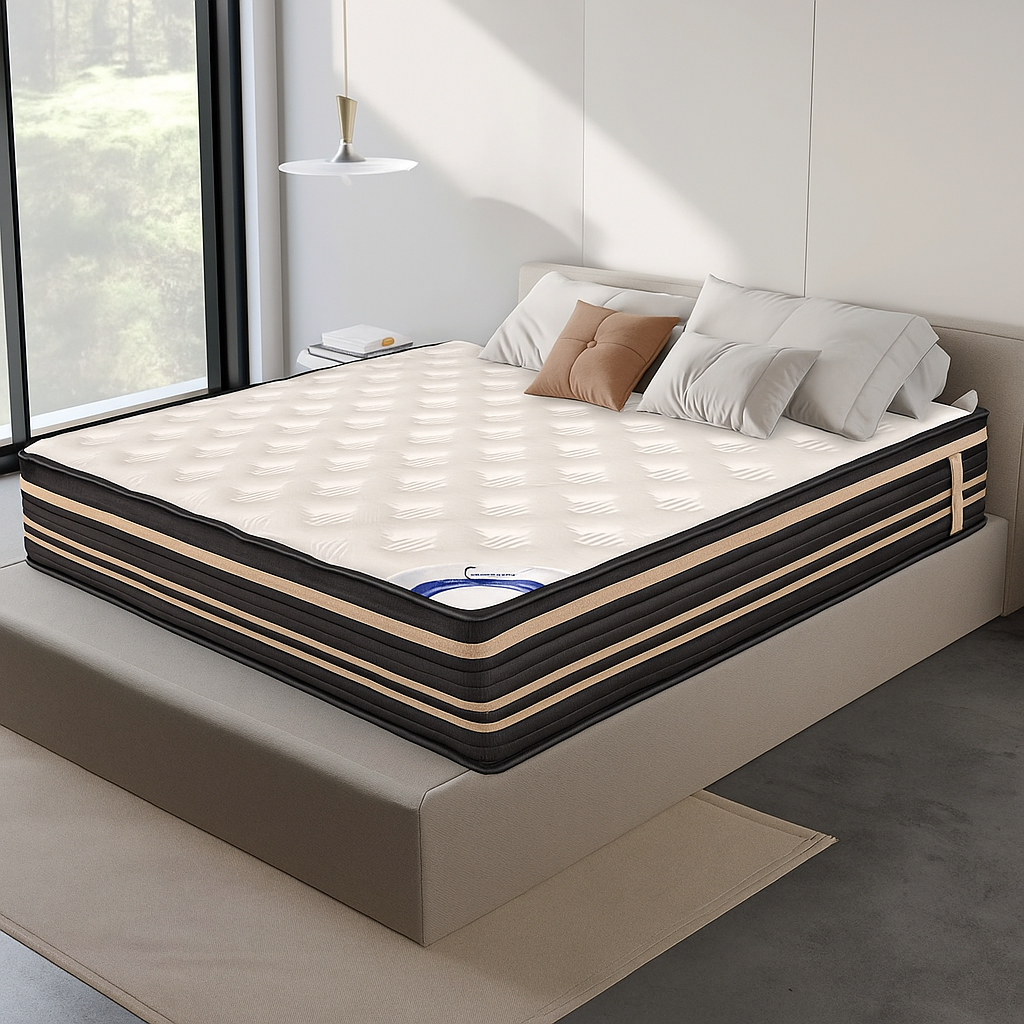
A mattress can feel comfortable for a few minutes and still be the wrong fit for a heavier body. Higher body weight compresses comfort layers more deeply, so the strength of the support core, edge stability, pressure relief and long-term durability matter more than a simple "firm" label.
Finding a Mattress Built to Support a Heavier Body
The best mattress for heavy sleepers usually combines a stable support system with enough cushioning to prevent pressure buildup. For many plus-size sleepers, a medium-firm to firm hybrid or pocket spring mattress is a practical starting point, but side, back and stomach sleepers do not all need the same feel.
This guide focuses on the decisions that matter in real life: firmness, sleep position, edge support, mattress construction, cooling, the bed base, trial terms and published weight limits. It also compares Total Comfort options using the specifications currently shown on their product pages.
Why Does Body Weight Change How a Mattress Feels?
Mattress firmness is relative to the person lying on it. A sleeper with a higher body weight generally compresses the comfort and support layers more deeply than a lighter sleeper on the same mattress. That can make a mattress feel softer and can expose weaknesses in the support core or perimeter sooner.
A Strong Support Core
Pocket springs, durable foam cores and reinforced support systems help resist deep compression and reduce the chance of feeling as though you are sinking through the mattress.
Pressure Relief Without Excessive Sink
Support should not mean sleeping on a hard board. Side sleepers still need cushioning around the shoulders and hips, while back and stomach sleepers usually need stronger resistance around the pelvis.
Reliable Edge Support
A stable perimeter gives you a more usable sleeping surface and makes sitting, getting in and out of bed, or sharing the mattress feel more secure.
Easier Movement
Responsive pocket springs, latex or firmer comfort layers can make position changes easier than very soft, slow-moving foams that allow deep sink.
Better Temperature Comfort
If you sleep warm in the UAE, breathable covers, spring systems, latex or cooling comfort layers can improve airflow and make the sleep surface feel less heat-retentive.
What Mattress Firmness Is Best for Heavy Sleepers?
There is no single firmness number that works for every heavier sleeper. Medium-firm to firm is a useful starting range for many people, but sleep position and body shape matter. Side sleepers generally need more cushioning than dedicated back or stomach sleepers.
| Sleep Profile | Good Starting Feel | Why |
|---|---|---|
| Heavy Side Sleepers | Medium-Firm to Firm | More pressure relief at the shoulder and hip, with a strong core underneath |
| Heavy Back Sleepers | Medium-Firm to Firm | Balances contouring with firmer support under the pelvis and lower back |
| Heavy Stomach Sleepers | Firm | More resistance under the midsection can help limit excessive hip sink |
| Heavy Combination Sleepers | Medium-Firm | A responsive surface makes changing position easier without sacrificing support |
| Two Heavier Sleepers | Medium-Firm to Firm | Check combined load capacity, edge support, motion isolation and bed-base strength |
Best Total Comfort Mattresses for Heavy or Plus-Size Sleepers
Celestia Luxury Hybrid Gel Memory Foam Mattress with Cooling Fabric
Best for Heat Relief · Premium CoolingThe Celestia Luxury Hybrid Gel Memory Foam Mattress with Cooling Fabric combines a firm feel, cooling gel memory foam and a pocket spring support system. Its foam-encased perimeter is especially useful for shoppers who want a more stable edge when sitting, getting in and out of bed, or using the full mattress surface.
For a heavier back or stomach sleeper who prefers a firmer surface, Celestia is one of the strongest construction-based options in the Total Comfort range. Couples may also value the pocket-spring motion isolation and reinforced perimeter.
View Celestia Mattress →Noctis Calm 5-Zone Pocket Spring Memory Foam Mattress
Best for Ortho Support · Targeted Zoned ComfortThe Noctis Calm 5-Zone Pocket Spring Memory Foam Mattress uses five support zones to vary support across the body, with individually wrapped springs and a foam-encased perimeter. Its medium-firm feel is a useful middle ground for people who need support but do not want an extra-firm surface.
It is a practical choice for heavier back sleepers, combination sleepers and couples who want zoned support, better edge stability and reduced partner disturbance without moving to the firmest option in the range.
View Noctis Calm Mattress →Janus Premium Reversible Pocket Spring Mattress
Best for Dual-Sided Support · Couples & Back SleepersThe Janus Premium Reversible Pocket Spring Mattress combines individually wrapped pocket springs with a practical dual-sided design, allowing the mattress to be flipped and used on both surfaces. Its medium-firm feel provides balanced support, while the pocket springs respond independently to movement and help reduce motion transfer between partners.
View Janus Mattress →Serene Pocket Spring Mattress
Best for Back Pain · Family FavouriteThe Serene Pocket Spring Mattress is a straightforward pocket-spring option available in medium and extra-firm feels. Individually wrapped springs provide responsive support while the foam-encased perimeter improves edge stability.
The Firm option may suit heavier back or stomach sleepers who dislike deep sinks. Side sleepers should be more cautious with extra-firm comfort because pressure relief at the shoulder and hip still matters.
View Serene Mattress →Does a Heavier Sleeper Always Need a Firmer Mattress?
Often, a higher body weight makes the same mattress feel softer, so many heavier sleepers prefer medium-firm to firm support. But the hardest mattress available is not automatically the best mattress for a heavier person.
Firmness and support are not the same thing. A very firm surface can still be poorly built, while a well-constructed medium-firm mattress can combine strong underlying support with enough cushioning for the shoulders, hips and joints.
Research on mattress firmness and low-back discomfort also argues against a simple "harder is always better" rule. In a randomized trial of adults with chronic non-specific low-back pain, medium-firm mattresses produced better outcomes than firm mattresses.
Use these practical starting points:
- Heavy side sleeper: prioritize pressure relief over maximum firmness
- Heavy back sleeper: look for balanced contouring with stable pelvic support
- Heavy stomach sleeper: a firm or extra-firm option may reduce deep midsection sink
- Combination sleeper: choose a responsive surface that is easier to move on
- Persistent pain or numbness: speak with a healthcare professional rather than treating mattress firmness as a diagnosis
The key is to find the least-firm mattress that still keeps you well supported through the night. If a mattress creates pressure at the shoulder or hip, extra firmness may be working against comfort rather than improving it.
Which Mattress Type Is Best for Heavy Side, Back and Stomach Sleepers?
Your sleeping position changes how much cushioning and resistance you need. Use the following as a starting point, then fine-tune the feel during the home trial.
By sleep position:
- Heavy side sleepers: medium-firm to firm hybrid or pocket spring builds can add pressure relief without losing core support
- Heavy back sleepers: zoned pocket springs or supportive hybrids can balance contouring with stronger support through the middle of the body
- Heavy stomach sleepers: firmer hybrid, pocket spring or dense support builds generally reduce deep pelvic sink
- Heavy combination sleepers: responsive pocket springs or latex-like comfort make position changes easier
- Couples: prioritize reinforced edges, motion isolation and the combined mattress-and-base load capacity
- Warm sleepers: consider breathable covers, spring airflow or cooling comfort layers
There is no single "plus-size mattress" construction that suits everyone. The best choice is the one that keeps you supported in your main sleep position without creating new pressure points.
How to Choose the Best Mattress for Plus-Size Sleepers?
When choosing the best mattress for plus-size sleepers, focus on support, durability and real-world comfort not mattress height alone.
- Check the weight limit: Confirm the recommended load per sleeper or for the entire mattress, along with the bed-base capacity.
- Look for a strong support core: Prioritize durable pocket springs, high-density support layers and reinforced construction.
- Choose strong edge support: A stable perimeter gives you more usable sleeping space and makes getting in and out of bed easier.
- Match firmness to your sleep position: Heavy side sleepers may need more cushioning, while back and stomach sleepers generally benefit from stronger support.
- Consider cooling features: Breathable fabrics, spring airflow and cooling comfort layers can help if you tend to sleep warm.
- Check your bed base: A strong mattress needs a stable foundation to maintain proper support and help reduce premature sagging.
- Use the sleep trial: Test the mattress through full nights of sleep rather than relying only on a few minutes in a showroom.
- Read the warranty carefully: Check coverage for body impressions, sagging, foundation requirements and other exclusions.
People Also Ask
What is the best mattress for heavy sleepers?
For many heavy sleepers, a medium-firm to firm hybrid or pocket spring mattress is a strong starting point because it combines a supportive core with surface cushioning. The final choice should match your sleep position, pressure-relief needs and the manufacturer's load guidance.
What is the best mattress for a heavy side sleeper?
Heavy side sleepers usually need a supportive mattress with more pressure relief at the shoulders and hips than a dedicated back or stomach sleeper. A medium-firm to firm hybrid with a cushioned comfort layer is a practical place to start.
Is a hybrid or pocket spring mattress good for heavy people?
Yes. Hybrid and pocket spring mattresses are often useful for heavier sleepers because the spring core can provide responsive support, airflow and strong edges when the perimeter is reinforced. Construction quality still matters more than the category name.
Is memory foam good for heavy sleepers?
Memory foam can work for a heavier sleeper when the comfort layer is not excessively soft and it sits over a strong support core. Very soft, thick memory foam may feel harder to move on or allow more sink than some sleepers prefer.
How firm should a mattress be for a 100kg or 120kg person?
Body weight alone does not determine firmness. A 100kg or 120kg side sleeper may prefer a different feel from a stomach sleeper of the same weight. Medium-firm to firm is a useful starting range, then adjusted for sleeping position and pressure relief.
How thick should a mattress for a heavier person be?
Thickness can provide more room for comfort and support layers, but a taller mattress is not automatically stronger. Prioritize the support core, edge construction, materials, published load limit and compatible bed base before choosing by height alone.
The Right Mattress Can Make Plus-Size Sleeping More Comfortable
The best mattress for heavy sleepers should provide strong, stable support without sacrificing pressure relief or comfort. The right combination of firmness, responsive support and reinforced edges can help reduce excessive sinking, improve ease of movement and create a more comfortable sleep surface throughout the night.
Total Comfort mattresses are manufactured in the UAE and backed by Reliance Bedding Industry's 25+ years of mattress-making experience. Explore our supportive mattress options below or speak with our sleep specialists for a personalized recommendation based on your body weight, sleeping position and preferred comfort feel.